By Dr. Jay Khatri | Wonder Smile Dental Clinic, Pimpri Chinchwad, Pune
Wondering whether clear aligners or teeth gap bands are better for closing gaps? At Wonder Smile we explain the risks of DIY bands and the safe, predictable results of professional clear aligner treatment.
On one end, you have clear aligners, a medically approved, dentist-supervised teeth-straightening system used by millions worldwide, available through trusted brands like Invisalign and Flash Aligners. On the other end, you have teeth gap bands, small elastic bands sold online for a few hundred rupees, popularised by YouTube and TikTok videos promising a quick fix at home.
This blog breaks down both options honestly: what they do, what the real risks are, what results you can expect, and how much each one costs in India in 2026.
What Are Teeth Gap Bands?
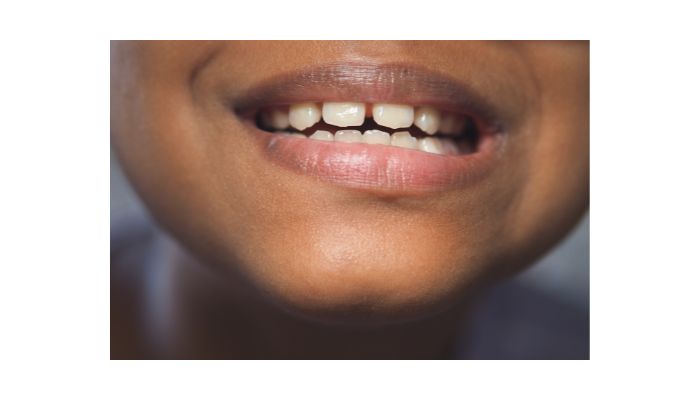
Gap bands are small rubber or elastic bands placed around two front teeth to pull them closer together. They are not an approved dental product. They are not designed by dentists. They are not supervised by anyone.
The idea spread through social media, where videos show people looping elastics around their two front teeth overnight and waking up with a visibly smaller gap. On the surface, it looks simple, cheap, and effective.
The reality under the surface is very different.
The Risks of Teeth Gap Bands
Dental professionals across India and globally have consistently warned against gap bands. Here is why they are dangerous.
1. The band can slide into your gums
Teeth are not square, they taper downward. Because of this shape, gap bands can slip up the teeth and embed themselves in the gums, causing severe tissue and root damage, potentially resulting in tooth loss.
Once a band slips under the gum, it becomes extremely difficult to remove without professional help. Once embedded in the soft tissues, it becomes difficult, if not impossible, to retrieve without the help of a dental professional.
2. The pressure is completely uncontrolled
Professional orthodontic treatment, whether traditional braces or clear aligners, applies a very specific, calculated amount of force to move teeth gradually and safely. Gap bands do none of this. Rubber bands provide unpredictable, uneven pressure that can move teeth too quickly or in the wrong direction. Excessive or improperly directed force can shorten tooth roots irreversibly, risking long-term tooth stability.
3. You can lose teeth
This is not an exaggeration. Gap bands used to close the space between two teeth can make their way under the gums, which can destroy the bone and soft tissue, causing teeth to fall out at the root.
4. Gap bands only do one thing — and poorly
Closing gaps between already-straight teeth is all they can attempt. They cannot treat crooked teeth, any type of crowding, or bite issues like overbite or underbite. And even for a simple gap, gap bands can cause significant damage to your gums, roots, and bone. Ultimately, you could lose your teeth, and replacing them is expensive and time-consuming.
5. Gum infection and bone loss
Rubber bands can slip into the gum line and become trapped around the roots of the teeth, leading to significant gum damage and infection. This may require surgical intervention to correct.
In short, a gap band is not a dental treatment. It is a risk taken with permanent teeth.
What Are Clear Aligners?
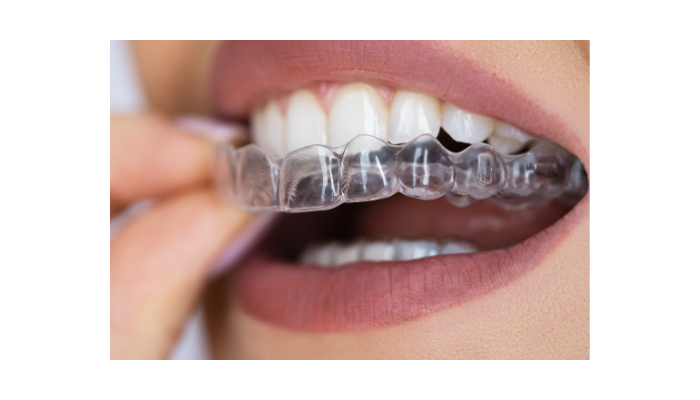
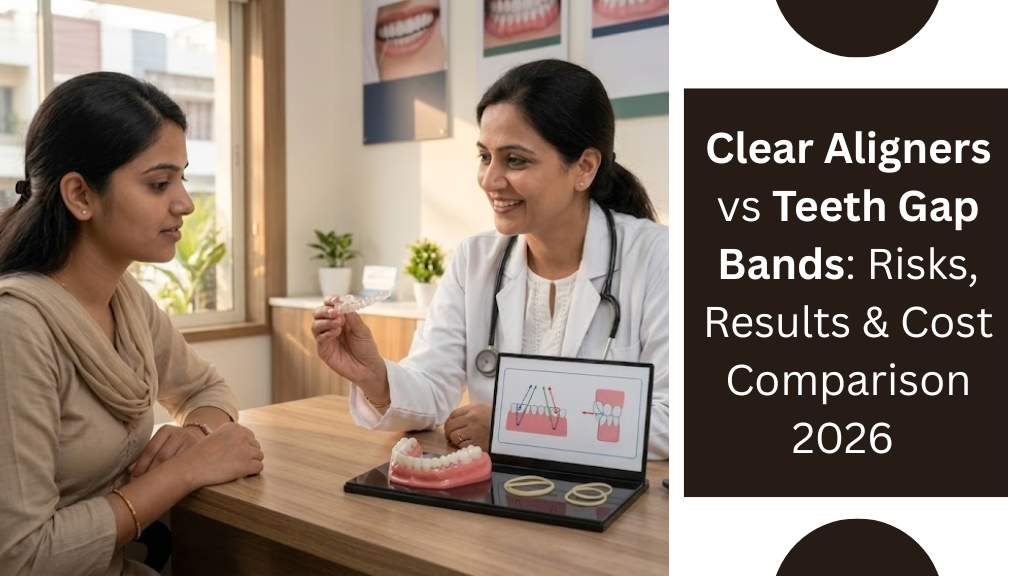
Clear aligners are a medically approved orthodontic system that uses a series of custom-made, transparent plastic trays to gradually shift your teeth into the correct position. Each aligner is created using a 3D digital scan of your mouth and is worn for one to two weeks before you progress to the next set in the series.
Popular clear aligner systems available in India include Invisalign and Flash Aligners, both are clinician-supervised and use advanced aligner technology to deliver precise, controlled tooth movement.
Unlike gap bands, clear aligners are:
- Designed by orthodontic engineers using advanced, clinically tested materials
- Planned and monitored by a certified dentist throughout your treatment
- Personalised to your exact teeth using digital mapping and 3D scans
- Able to treat a wide range of conditions, gaps, crowding, overbite, underbite, crossbite
At Wonder Smile in Chinchwad, Pune, Dr. Jay Khatri is a certified provider for clear aligner treatments. We use intraoral scanning technology to plan your treatment precisely before a single aligner is made.
Why an Orthodontist Gets the Best Results with Clear Aligners
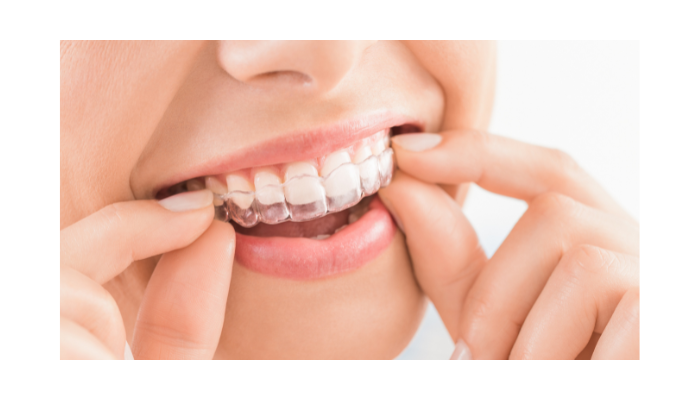
Not all clear aligner providers are the same, and this matters more than most people realise.
An orthodontist is a specialist. After completing a dental degree (BDS), they go on to complete a 3-year postgraduate specialisation (MDS) in orthodontics, focused entirely on correcting teeth alignment, jaw development, and bite problems. This is not general dentistry. It is advanced, dedicated training in exactly what clear aligners are designed to do.
That specialist background means:
- More precise treatment planning — aligners are sequenced based on how forces actually move teeth through bone, not just how they look
- Better outcomes for complex cases — crowded teeth, deep overbites, multiple gaps, and rotations need expert hands
- Fewer mid-treatment corrections — a specialist anticipates problems before they occur
At Wonder Smile, Dr. Jay Khatri brings this specialist-level expertise to every clear aligner case, backed by intraoral scanning technology for precise digital planning from day one.
The aligners are only as good as the plan behind them. An orthodontist makes sure that the plan is right.
What Results Can You Actually Expect?
Gap Bands
In the short term, a gap band may appear to close a space. However, because the tooth movement is uncontrolled and no retainer is worn afterwards, the gap usually returns. Worse, the bone and tissue damage that occurred beneath the surface may cause long-term problems, including teeth that shift further, loosen, or eventually require extraction.
Clear Aligners
Clear aligners treat the root cause of misalignment. Each tray moves teeth by a precisely calculated fraction of a millimetre per step. Because the entire treatment is planned digitally from start to finish, you can see a simulation of your expected result before treatment even begins. After completing treatment, a retainer is provided to keep your teeth in their new position long-term.
Clear aligners can effectively treat:
- Simple front teeth gaps (diastema)
- Crowded teeth
- Mild to moderate overbite or underbite
- Crossbite
- Spaced teeth across multiple areas
Cost Comparison: Gap Bands vs Clear Aligners in India (2026)
| Gap Bands | Clear Aligners (Pune) | |
| Cost | ₹200 – ₹500 online | ₹80,000 – ₹3,50,000* |
| Doctor Supervision | None | Certified provider throughout |
| Custom-Made | No | Yes — 3D digital scan |
| Conditions Treated | Gap only (one type) | Gaps, crowding, bite issues |
| Treatment Duration | Weeks (temporary) | 6–18 months (permanent) |
| Results Permanent? | No — gap returns | Yes — with retainer |
| Safety | Dangerous — no clinical basis | Safe — clinically approved material |
| Risk of Tooth Loss | Yes | No (under proper supervision) |
| Bone & Gum Health | At serious risk | Protected throughout |
Clear aligner treatment cost in Pune varies by brand and case complexity. Systems like Invisalign and Flash Aligners are priced differently, starting from approximately ₹80,000 for straightforward cases and going up for more complex corrections. Your final quote is only possible after a clinical examination.
The difference in cost is significant. But so is the difference in outcome and safety. A gap band that causes you to lose a tooth, or that requires bone grafting, gum surgery, or a dental implant to correct, will cost far more in the long run than starting with the right treatment from day one.
What Should You Do If You Have a Tooth Gap?
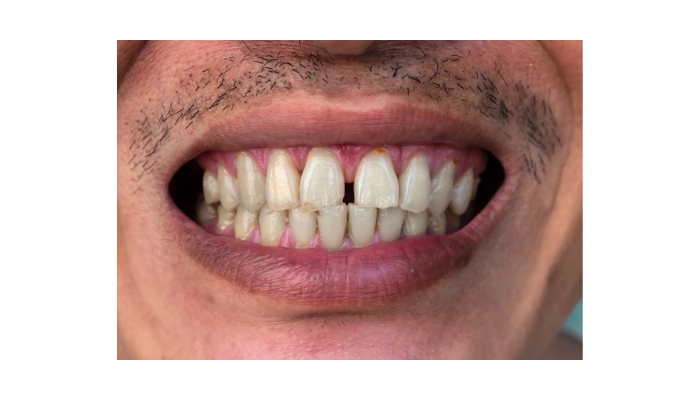
If you have a gap between your teeth that is bothering you, here is what we recommend:
Step 1: Book a consultation. No two gaps are the same. Some are caused by the shape of the jaw, some by missing teeth, some by a tissue attachment between the front teeth (called a frenum). A dentist needs to assess the actual cause before recommending the right treatment for you.
Step 2: Understand your options. Clear aligners are excellent for most gaps. In some cases, a veneer or bonding may be appropriate. In others, traditional orthodontic treatment with braces may be a better clinical fit.
Step 3: Avoid DIY dental products. No rubber band, elastic, or at-home kit is a substitute for a supervised treatment plan. The risks are permanent, even if the results look temporary.
The Final Verdict
Gap bands are cheap. They are also genuinely dangerous. The savings of a few hundred rupees are not worth the risk of losing a tooth, damaging bone, or needing surgical intervention to repair the damage.
Clear aligners cost more, but they are a real medical treatment, carried out by a qualified professional, using technology designed specifically for safe tooth movement. Whether you choose a system like Invisalign or Flash Aligners, what matters most is that your treatment is planned by a dentist, monitored throughout, and suited to your individual case.
For a gap that bothers you every time you smile, it is the kind of investment that pays off every single day.
At Wonder Smile in Chinchwad and Wakad, Pune, Dr. Jay Khatri offers personalised clear aligner consultations using advanced intraoral scanning to give you an honest, transparent assessment of your teeth and treatment options.
Book an appointment today and find out whether clear aligners are the right solution for your gap, with no pressure, no guesswork, and no hidden costs.
Frequently Asked Questions (FAQs)
Q1: Are teeth gap bands a safe, budget-friendly alternative to clear aligners?
A: Absolutely not. While teeth gap bands are cheap, they are incredibly dangerous. Unlike professional clear aligners, which exert calculated, controlled pressure under dental supervision, DIY rubber bands can easily slide beneath your gum line. This can cut off the blood supply to your teeth, destroy bone structure, and lead to permanent tooth loss.
Q2: Why are clear aligner consultations necessary before starting treatment?
A: A professional clear aligner consultation is crucial because moving teeth safely requires a thorough evaluation of your root health, bone density, and overall bite structure. A dentist or orthodontist uses advanced 3D imaging to map out precise movements, ensuring your teeth shift safely without causing long-term nerve or structural damage.
Q3: How long do clear aligner results last compared to teeth gap bands?
A: Clear aligners offer highly predictable, permanent results, provided you wear your custom retainers as directed after treatment. On the other hand, closing a gap with DIY bands is highly unstable. Even if the gap closes initially, the teeth almost always relapse, shift into worse positions, or become loose due to underlying root damage.
Q4: What are the hidden costs of using DIY teeth gap bands?
A: While a pack of rubber bands costs virtually nothing upfront, the long-term medical costs can be devastating. Repairing the damage caused by teeth gap bands often requires extensive emergency dental procedures, including root canals, gum grafts, bone splints, or expensive dental implants to replace lost teeth—potentially costing tens of thousands of dollars.